Authentic Tempura Batter Science: Gluten Inhibition, Ice Water Emulsions, and Flash-Steam Crispness
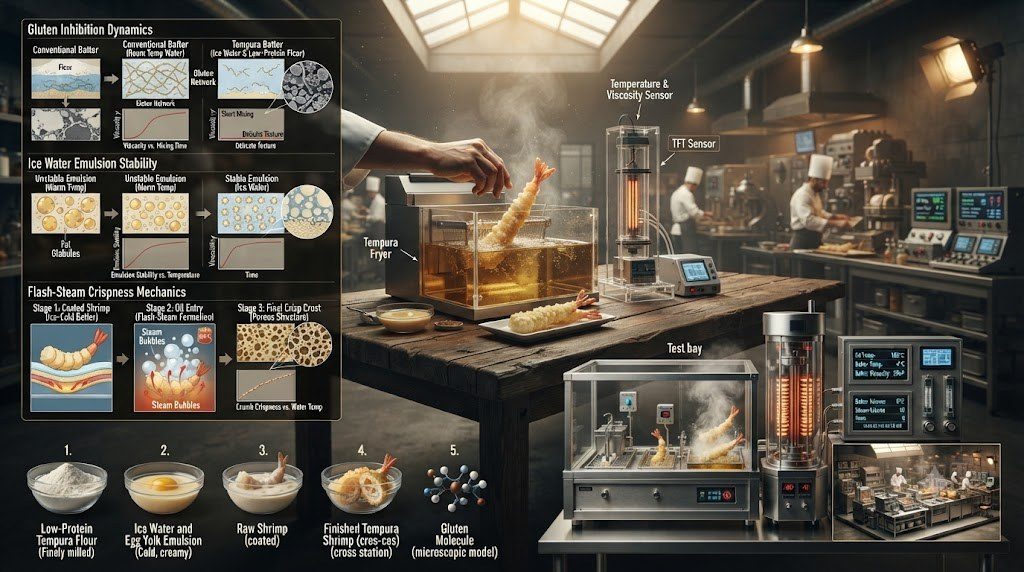
In the pantheon of global fried foods, traditional Japanese Tempura represents the absolute zenith of delicacy, lightness, and textural minimalism. Unlike heavy, thick Western beer-battered fish or dense Southern cornmeal crusts that encase food in an opaque structural armor, authentic Edomae tempura is characterized by an ethereal, semi-translucent, lace-like coating (the famous koromo). The fried … Read more

Deep Frying Oil Chemistry: Smoke Points, Triglyceride Degradation, Vapor Barriers, and Crispness Physics

Deep frying is frequently misunderstood as a crude, grease-heavy cooking method. In reality, when executed with scientific precision, deep frying is an extraordinary, high-efficiency dehydration and steam-cooking process. Submerging food into hot oil maintained between 165°C and 190°C (325°F to 375°F) utilizes liquid oil as a high-density thermal conduction medium—transferring thermal energy into food up … Read more

Rotisserie Spit-Roasting Science: Gyroscopic Self-Basting, Radiant Emissivity, and Uniform Heat Convection

From medieval castle hearths turning whole boars on iron spits to modern Parisian rotisseries roasting golden chickens and Middle Eastern vertical shawarma spits slicing tender seasoned lamb, Rotisserie Cooking (Spit-Roasting) represents one of the most mechanically elegant and thermodynamically superior methods of cooking meat known to culinary science. While traditional roasting in a static oven … Read more

Cedar Plank Grilling Mechanics: Steam-Wood Infusion, Thermal Buffering, and Delicate Seafood Mastery

Grilling delicate, moisture-rich proteins—most notably wild salmon fillets, Arctic char, sea scallops, and camembert cheese—presents an immediate physical challenge on an open barbecue grate. The intense, direct radiant heat of charcoal or gas burners easily exceeds 300°C (572°F), rapidly vaporizing delicate surface moisture, causing thin skin to weld irrevocably to metallic grill grates, and overcooking … Read more

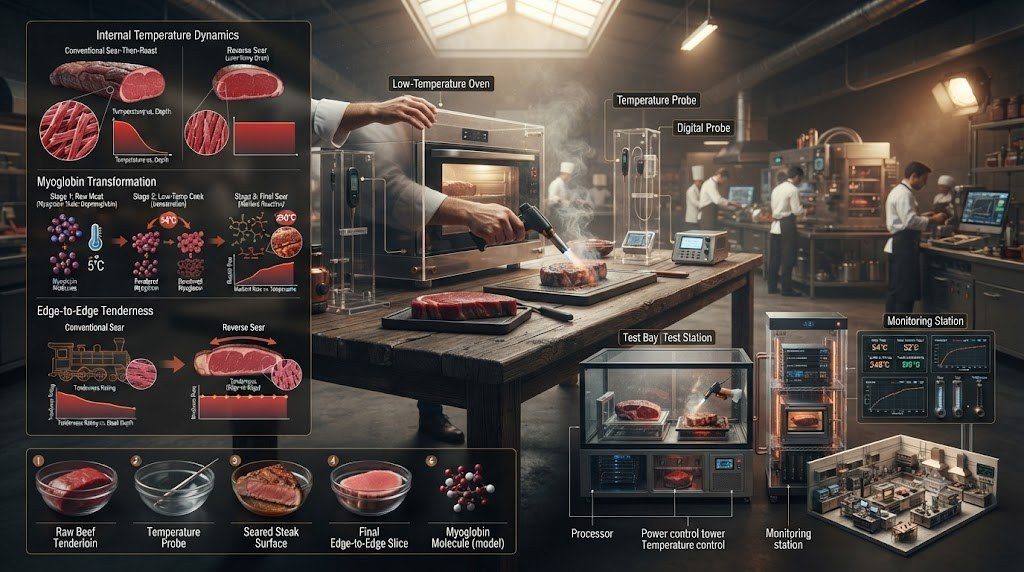
The Reverse Sear Technique: Internal Temperature Dynamics, Myoglobin Transformation, and Edge-to-Edge Tenderness

For more than a century, professional culinary textbooks and kitchen dogma instructed chefs to execute the “sear-and-bake” method: searing a raw thick-cut steak in a scorching-hot skillet or directly over blazing charcoal coals before transferring it to a moderate oven to finish cooking through. While this traditional technique works adequately for thin cuts, applying it … Read more

The Chemistry of Wood Smoke and Fire: Charcoal vs. Gas Thermodynamics, Maillard Reactions, and Barbecue Science

Live-fire grilling and low-and-slow barbecue represent humanity’s oldest cooking methodology, yet they remain among the most intricate arenas of culinary organic chemistry and thermodynamics. Cooking over fire is fundamentally distinct from cooking in a standard kitchen oven or on an electric stovetop. When meat is suspended over glowing coals, fragrant hardwood embers, or high-output gas … Read more

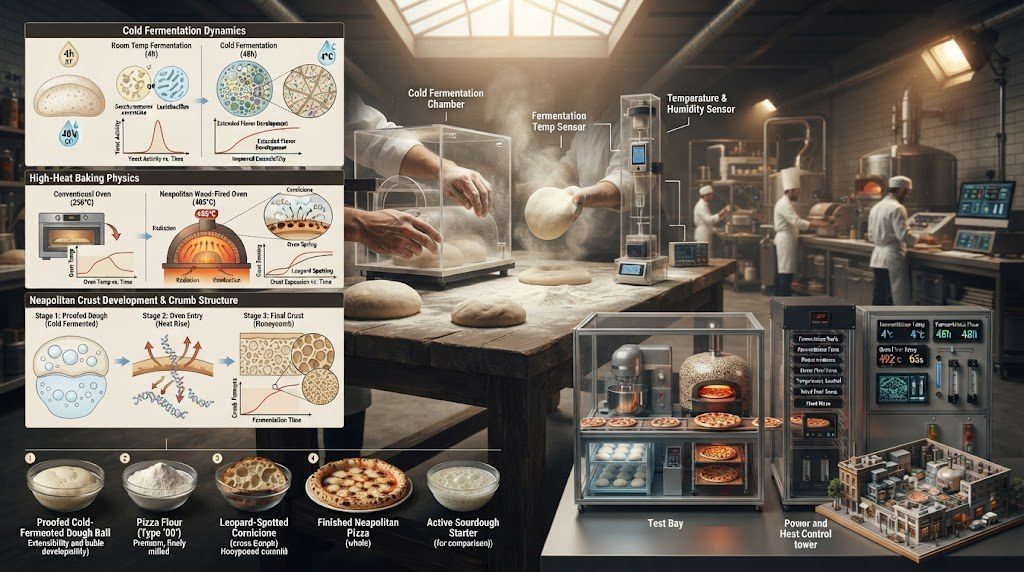
Artisan Pizza Dough Mastery: Cold Fermentation, High-Heat Baking Physics, and Neapolitan Crust Development

In global culinary culture, few dishes command as passionate a following or as rigorous an engineering standard as authentic artisan pizza. From the blistered, pillowy, leopard-spotted cornicione of a traditional Neapolitan pizza baked in 60 seconds at 485°C (900°F) to the crisp, airy, olive-oil-fried crust of a Roman pizza al taglio or Detroit square, true … Read more

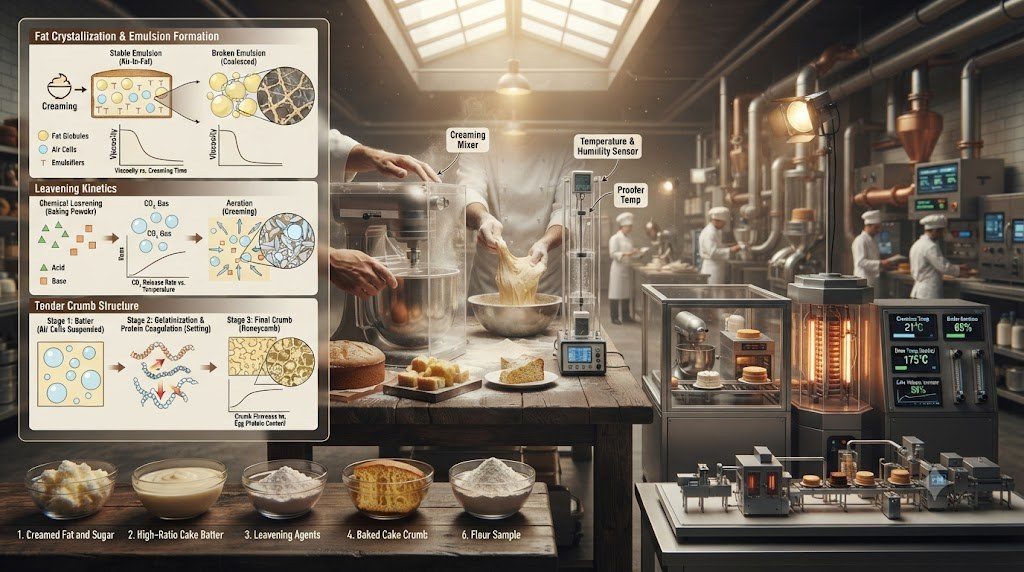
Cake Chemistry and Batter Emulsions: Fat Crystallization, Leavening Kinetics, and Tender Crumb Structure

While bread baking relies on the development of an elastic, tenacious, three-dimensional gluten matrix to trap gas, cake baking is governed by the exact opposite structural objective: the strategic suppression and tenderization of gluten. A flawless cake—whether a towering multi-tier wedding cake, a tender sponge, or an ethereal chiffon—requires a delicate, velvety, moist crumb that … Read more

The Art of Viennoiserie: Butter Plasticity, Dough Lamination Physics, and Flaky Croissant Layers

In classical French pastry arts, Viennoiserie occupies the exalted culinary intersection where enriched yeast doughs converge with the precision mechanics of laminated puff pastry. Prototypical Viennoiserie—most famously the classic butter croissant, pain au chocolat, and Danish pastry—is celebrated for its honeycombed interior crumb, feather-light aerodynamic density, and delicate, paper-thin, shattering golden crust. Achieving this culinary … Read more

The Science of Sourdough Bread Baking: Starter Fermentation, Dough Hydration, and Oven Spring Mechanics

Among the culinary arts, few disciplines merge biochemistry, microbiology, and thermodynamics as elegantly as artisan sourdough bread baking. While commercial white sandwich breads rely on isolated mono-cultures of commercial baker’s yeast (Saccharomyces cerevisiae) and chemical dough conditioners to force rapid proofing in under an hour, true sourdough bread is the product of an ancient, living, … Read more

About CookCraftHub

About CookCraftHub

CookCraftHub is an authoritative culinary science and gastronomy reference devoted to the empirical mechanics of cooking, sourdough microbiology, Maillard reaction dynamics, and precision kitchen techniques. We bridge culinary craft with food science.

Learn More →
Artisan Baking Hydration & gluten rheology
Food Microbiology Koji, lacto & yeast cultures
Thermal Cooking Maillard browning & sous-vide