The Science of Fermented Beverages: SCOBY Ecology, Yeast-Bacteria Symbiosis, and Organic Acid Generation in Kombucha

Over the past three decades, the global resurgence of artisan fermented tonics, botanical sodas, and effervescent teas has transformed the functional beverage landscape. At the absolute center of this botanical fermentation movement stands Kombucha—a slightly effervescent, tart, sweet, and probiotic tea beverage originating over two millennia ago in Northeast Asia during the Qin Dynasty. What … Read more

Traditional Vinegar Fermentation: Acetobacter Biofilm Kinetics, Alcohol Oxidation, and Artisan Mother Maintenance

Across every culture that mastered the production of wine, beer, or cider, the inevitable natural evolution of spoiled alcohol gave rise to one of culinary science’s most potent preservatives and flavor enhancers: Vinegar (derived from the Old French vinaigre, literally “sour wine”). From the dark, complex 25-year wood-aged Traditional Balsamic Vinegars of Modena to Spanish … Read more

Koji Mold Cultivation (Aspergillus oryzae): Amylase and Protease Enzymatic Cleavage in Miso and Soy Sauce

In the culinary history of East Asia, no single biological agent has exerted a more profound influence on gastronomic culture than the filamentous fungus Aspergillus oryzae, affectionately designated in Japan as the “National Fungus” (Koji-kin, 麹菌). Koji serves as the foundational bio-catalytic engine behind virtually all traditional Japanese umami staples—including miso paste, soy sauce (shoyu), … Read more

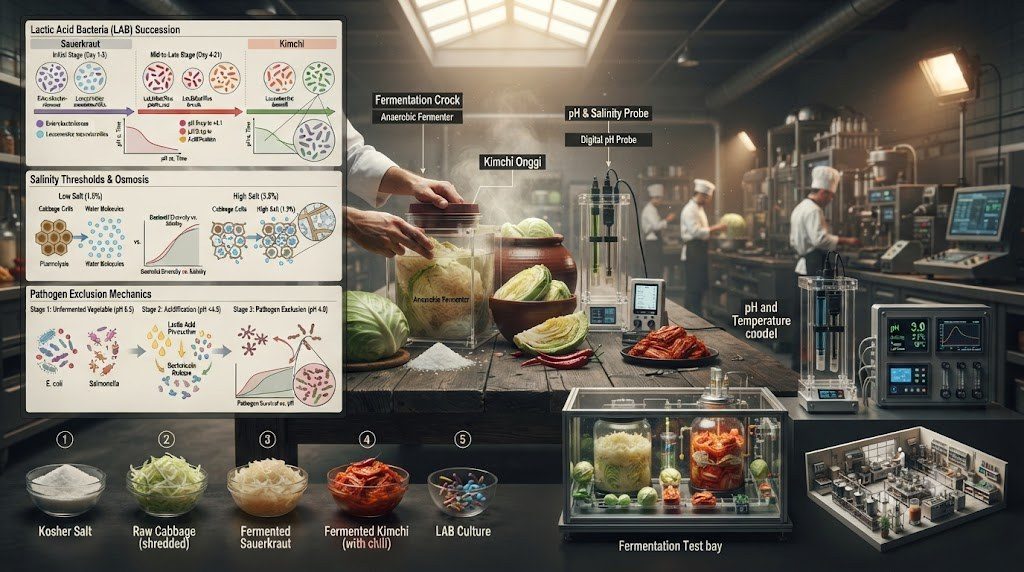
The Microbiology of Lacto-Fermentation: LAB Succession, Salinity Thresholds, and Pathogen Exclusion in Sauerkraut & Kimchi

Long before the invention of mechanical refrigeration or chemical canning, ancient civilizations mastered the biological alchemy of Lactic Acid Fermentation (Lacto-Fermentation). From the salted earthen jars (onggi) of Korean kimchi to the ceramic crock-pots of German sauerkraut and the brined dill pickles of Eastern Europe, lacto-fermentation has preserved vegetables for thousands of years while dramatically … Read more

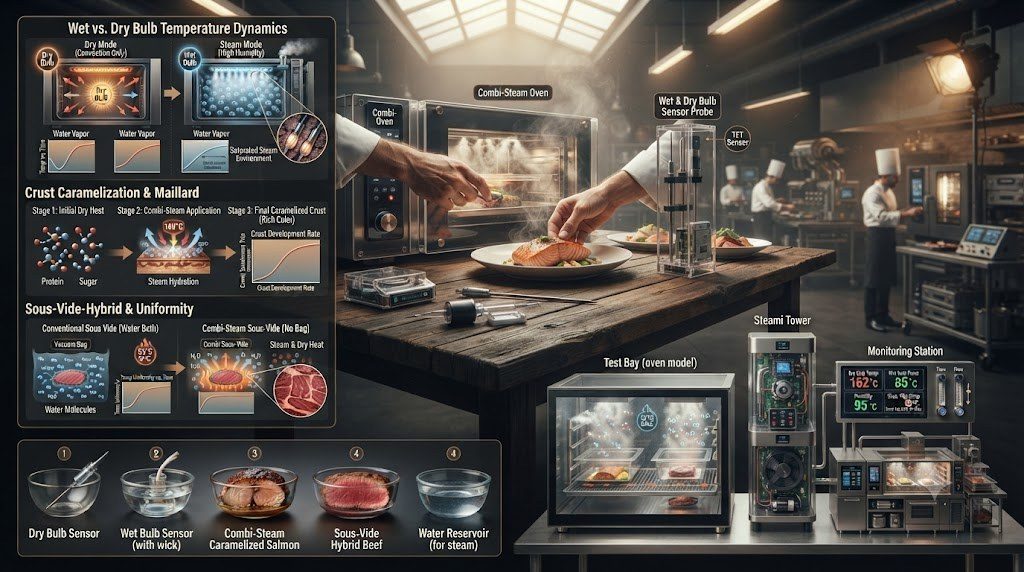
Combi-Steam Oven Technology: Wet vs. Dry Bulb Temperature Dynamics, Crust Caramelization, and Sous-Vide Hybrids

In modern professional gastronomy, few technological innovations have exerted as transformative an impact on kitchen engineering as the Combination Steam Oven (Combi-Oven). First pioneered in Germany by Rational in the late 1970s and now a staple in Michelin-starred establishments and cutting-edge culinary research laboratories, the combi-oven bridges the gap between convection baking, saturated steaming, and … Read more

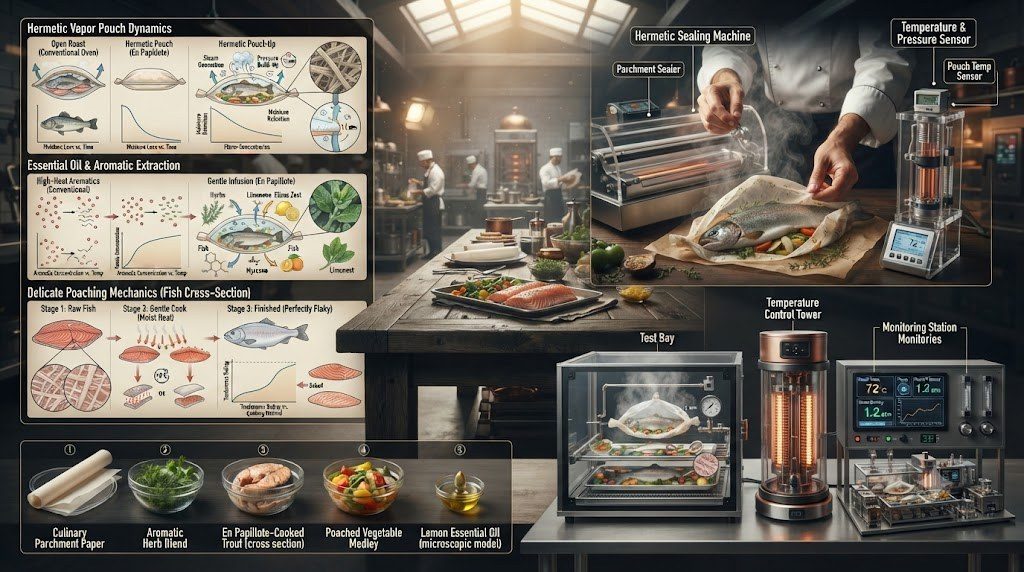
Cooking En Papillote: Hermetic Vapor Pouch Dynamics, Essential Oil Extraction, and Delicate Poaching

In classical French haute cuisine, few culinary presentations rival the theatrical elegance of Cooking En Papillote (literally, “in parchment” or paper envelope). When a puffy, golden-brown parchment pouch is carried to the dining table and sliced open with a sharp knife before an expectant guest, an intoxicating plume of fragrant vapor rushes outward, filling the … Read more

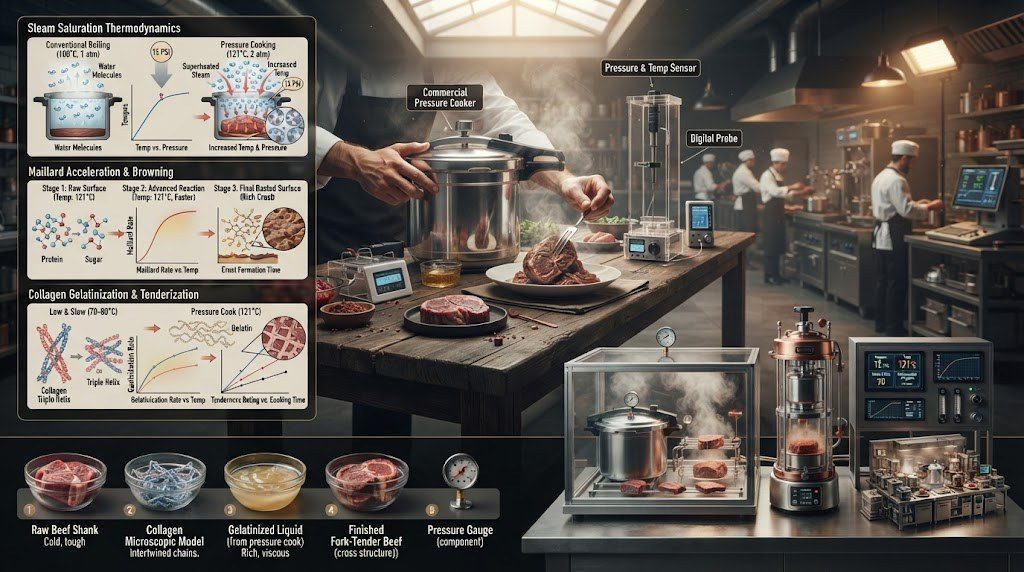
Pressure Cooking Science: Steam Saturation Thermodynamics, Maillard Acceleration, and Collagen Gelatinization

In the physical universe of cooking, the maximum temperature of liquid water is strictly dictated by local ambient atmospheric pressure. At standard sea-level barometric pressure (1 atmosphere, or 101.3 kPa), water boils at 100°C (212°F). No matter how intensely you crank up the gas flame beneath an open stockpot, the boiling liquid water cannot exceed … Read more

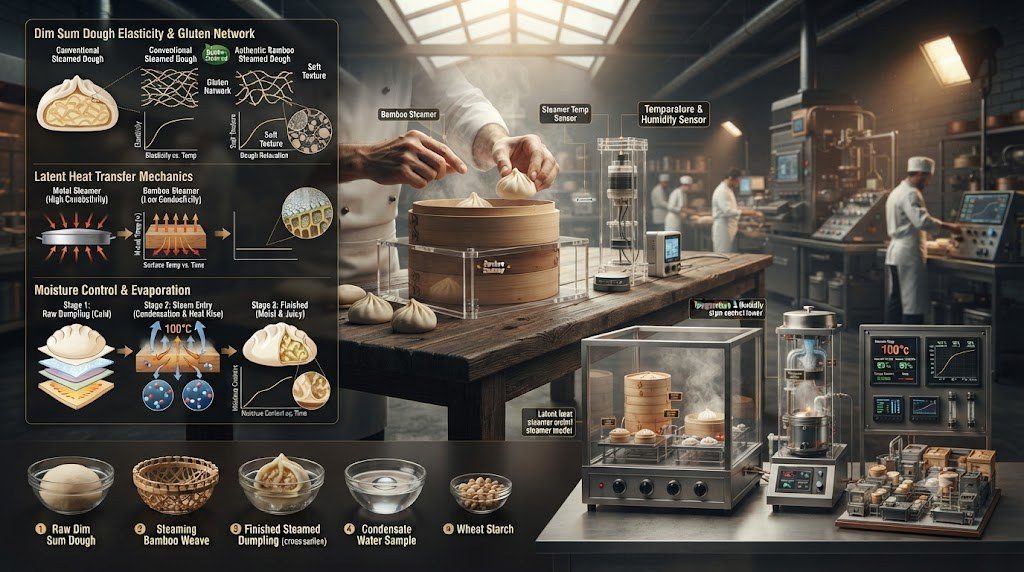
Bamboo Basket Steaming Physics: Dim Sum Dough Elasticity, Latent Heat Transfer, and Moisture Control

For more than two millennia, the multi-tiered Woven Bamboo Steaming Basket (Zhēnglóng, 蒸笼) has stood as one of the most sophisticated, sustainable, and thermodynamically flawless cooking apparatuses in culinary history. Central to Cantonese dim sum culture—producing translucent crystal har gow shrimp dumplings, pillowy char siu bao buns, and delicate soup dumplings (xiao long bao)—the bamboo … Read more

Air Frying Thermodynamics: High-Velocity Convection Dynamics, Surface Dehydration, and Oil Reduction Science

Over the past decade, the rapid ascendancy of the Air Fryer has revolutionized residential and commercial small-appliance culinary technology. Marketed as a revolutionary health appliance capable of replicating the crisp texture of deep-fried foods with up to 80% less oil, the air fryer is often misunderstood by consumers as an entirely novel heating modality. In … Read more

Pan-Frying vs. Shallow Frying: Skillet Thermal Mass, Surface Fond Development, and Pan Sauce Emulsions

In culinary discourse, the terms pan-frying, shallow frying, and sautéing are frequently conflated, yet in thermodynamic and physical execution, they represent distinct cooking methodologies with radically different fluid dynamics, heat transfer coefficients, and surface flavor chemistry. While deep frying submerges food entirely within an isotropic bath of hot fat, pan-frying and shallow frying operate at … Read more